


| Issue |
Sust. Build.
Volume 8, 2025
|
|
|---|---|---|
| Article Number | 3 | |
| Number of page(s) | 10 | |
| Section | Modelling and Optimisation of Building Performance | |
| DOI | https://doi.org/10.1051/sbuild/2025009 | |
| Published online | 22 September 2025 | |
Original Article
Visualization scheme of residential design combining BIM and VR technology
1
School of Management, Xi’an University of Finance and Economics, Xi’an 710100, China
2
The Engineering Design Academy of Chang’an University Co., Ltd., Xi’an 710061, China
* e-mail: This email address is being protected from spambots. You need JavaScript enabled to view it.
Received:
13
October
2024
Accepted:
21
August
2025
Abstract
Economic development arouse the people's increasing pursuit of life. To meet people's design requirements for daily living places, it is essential to propose a reasonable residential design scheme. The research combines Building Information Modeling (BIM) and virtual reality (VR) technologies, aiming to enhance the visualization effect of residential design. The research first establishes a BIM three-dimensional model to reflect the building structure and cost data, and then applies genetic algorithms to optimize the design cost to ensure economy and efficiency. With the help of VR technology, users can experience residential design in an immersive way and feel the spatial layout and environmental atmosphere through virtual roaming. In the experimental analysis, the application effect of the genetic algorithm is evaluated first. It has a significant effect on residential housing cost control and reduces the daily capital use of residential housing construction in the Building Information Modeling model building simulation. Further, the Building Information Modeling model can effectively calculate the risk value of residential housing. The Building Information Modeling+Virtual Reality visualization collaborative experiment shows that the visualization effect is good, the model lag time is less than 0.06s. The high satisfaction evaluation of most groups can be obtained. The above results show that Building Information Modeling+Virtual Reality technology can realize the design visualization in residential design; Building Information Modeling+Virtual Reality technology shows a good application effect. It is of great value to the development of digital technology and engineering practice.
Key words: Building information modeling / virtual reality residential design / visualization cost control / risk assessment / immersive experience
© W. Li and M. Miao, Published by EDP Sciences, 2025
 This is an Open Access article distributed under the terms of the Creative Commons Attribution License (https://creativecommons.org/licenses/by/4.0), which permits unrestricted use, distribution, and reproduction in any medium, provided the original work is properly cited.
1 Introduction
The urbanization is accelerating under the continuous economic development, and the improvement of people's living standards makes a large number of urban residents begin to put forward higher residential design requirements. In response to the increasing requirements of residents, the engineering design of the construction industry also began to put forward more effective residential design schemes based on the existing technology. Among them, CAD technology has faster design efficiency and is widely used in the preliminary design of the construction industry. However, with the continuous improvement of digital technology, CAD two-dimensional drawing is difficult to meet the design requirements [1]. Therefore, BIM technology has been proposed to realize three-dimensional building information through three-dimensional modeling, to display the architectural design scheme. However, with the increasing importance of residents' experience in architectural design, it is difficult to meet residents' needs by simply using BIM technology in residential design [2]. The birth of VR technology is to achieve product design through an immersive experience and propose products closer to the needs with the help of users' immersive experience results. For this reason, some studies believe that it is reasonable to apply VR technology to residential design. However, it can be found from the current situation of residential design in the construction industry and the application of digital technology that few studies combine BIM with VR technology to conduct reasonable design of residential buildings [3]. Therefore, combining BIM technology and VR technology, compared with the traditional residential design technology, on the one hand, BIM + VR collaborative technology improves the deficiency of BIM performance in visualization and improves the difficulty of layman's knowledge of drawings; on the other hand, it makes up for the deficiency of VR technology in expressing building data, and the two technologies are complementary. The research proposes BIM+VR collaborative technology, aiming to build a reasonable three-dimensional model of residential buildings with BIM technology, realize users' immersive roaming with VR technology. This is to realize the visual design of residential buildings and provide a theoretical reference for the development of the construction industry and the application of digital technology in engineering practice.
The research organization structure is mainly divided into four parts. The second part will review the research progress related to residential design, with a focus on discussing the current situation and deficiencies of the application of BIM and VR technologies in the current construction industry. The third part will introduce in detail the visual collaboration scheme based on BIM and VR technologies, and specifically elaborate on how to achieve cost control and visual display in residential design; The fourth part will present the experimental verification results, evaluate the application effect of genetic algorithms in BIM models and the practical effect of visual collaborative design combining BIM and VR; Finally, the fifth part summarizes the main findings of the research, explores the application prospects of BIM and VR technologies in the visualization of residential design, and puts forward suggestions for future research.
2 Related works
With the development of the economy, people pay more and more attention to the demand for daily life quality, so research has been gradually deepened in residential design. Namian et al. deeply analyzed the influencing factors in contemporary residential design. This is to propose a more reasonable and effective residential design scheme through the analysis of influencing factors. In its research, it is found that residents' lifestyle has a significant impact on residential design. Through calculation, more than 0.8 functional features in residential design are affected by personal lifestyle, which provides a more effective reference for residential design [4]. Kim and Yi tested QuVue software for residential design, which can measure the proportion of visible sky to improve flexibility in building construction. The experiment shows that QuVue software can handle the complex environment around the building, including the height of roads, trees, and surrounding buildings, optimize the spatial layout in the site planning. It can ultimately improve the spatial beauty of residential design [5]. Alwisy Adengre et al. used BIM technology to realize the automation of architectural design drawings. At the same time, they studied and proposed a BIM drawing method combined with CAD to reduce the excessive cost of BIM in use. The experimental analysis shows that the method proposed in this study can reduce the cost in the early stage based on improving the design layout of residential buildings. At the same time, the simulation shows that the method has a significant effect on productivity improvement [6]. To improve the comfort of residential buildings, Roshan et al. analyzed the impact of climate change on residential design and put forward residential construction plans. The experiment shows that climate change has a significant impact on residential design, and proposes residential construction suggestions by predicting the future climate change trend [7]. Ochedi and Taki put forward a design idea of energy-saving residential buildings, believing that the intelligent design and envelope structure of residential buildings can significantly reduce the energy consumption of residential buildings in the use. Based on this, the study proposes a sustainable residential design framework. It also proposes a design scheme by analyzing the thermal discomfort of residential buildings, to improve sustainability of residential buildings [8].
With the application of intelligent technology, digital technology in the construction industry is gradually widely used, especially BIM and VR technology. Al-Ashmori et al. have significant advantages in the construction industry and believe that the adoption of BIM technology can significantly improve the productivity and performance of the construction industry. The team learned about the application status of BIM technology through a questionnaire survey, proposed the defects in the application of BIM technology and its significant advantages [9]. Kim et al. proposed an improved electronic submission system based on traditional BIM and an open BIM architecture licensing framework. In the research, the framework was used to realize the preliminary design and simulation of the construction project. Finally, the feasibility and effectiveness of the proposed framework were verified through experiments, which did not provide a theoretical basis for the subsequent application of BIM technology in the construction industry [10]. Ahankoob et al. investigated the current application of BIM technology and analyzed the advantages of BIM in engineering applications. In this study, academic scholars and industry practitioners were taken as the research objects to analyze the use experience of BIM, to improve the use efficiency of BIM in the construction industry. Finally the basic cognition of learning and applying BIM technology are obtained, providing a basis for the development of BIM [11]. Wang introduced VR technology and intelligent algorithm in the landscape design of coastal areas, aiming to meet the growing demand for high-quality life by using digital technology. The research shows that the use of VR technology for landscape design can achieve real editing and simulation of the landscape environment. This shows that the application of VR technology to architectural design can effectively achieve design visualization [12]. Zhuang studied the new strategy of building modeling. This new strategy realized the interaction between building models and users by using 5GVR technology, and optimized the 3D model of building design by using computer vision technology. The experimental evaluation shows that the 5GVR technology proposed in this study can draw building scenes in real-time and obtain basic information about building structures with intelligent algorithms [13].
To sum up, in the current social situation, a large number of construction industries have put forward reasonable residential design schemes to meet the needs of user experience. At the same time, to improve their construction efficiency, the construction industry has gradually begun to introduce BIM technology and VR technology. However, it can be seen from the current research situation that a large number of scholars and the construction industry have not shown enough effect in the application of BIM and VR technology, nor have fully developed the core capabilities of BIM and VR technology. Therefore, the research proposes to integrate BIM technology and VR technology and introduce intelligent algorithms to improve the efficiency of architectural design. This also can provide ideas for the comfortable design of residential buildings, and offer references for the intelligent development of the construction industry.
3 Visual collaboration scheme based on BIM+VR technology
3.1 Cost control of residential design based on BIM technology
The earliest research on BIM technology can be traced back to the 1970s. The BIM technology is mainly to realize the sharing of the whole life cycle in the architectural design and construction stage and to provide a means of collaboration and communication for the management and engineering parties involved in the construction [14]. It demonstrates that the current application status of BIM technology that it has excellent characteristics such as coordination, visibility, etc. Under the application of BIM technology, the construction can be simulated to improve the construction design scheme. Figure 1 indicates its application scope.
Figure 1 shows that in the application of BIM technology, for building construction, it is mainly responsible for construction design, project cost calculation, construction supervision, and building management and maintenance. In the construction design stage, BIM technology can be used to design the building structure, water, and electricity. At the same time, a design scheme review can be achieved in the building construction design. In the cost calculation, BIM technology can calculate the cost of construction consumables and personnel according to the project planning and planning plan. The construction supervision based on BIM is to supervise and manage the construction and constructors in the construction stage, ensuring normal construction and the safety of constructors. Finally, in building management and maintenance, it is necessary to effectively manage building space, operate and maintain drainage, heating, and other facilities. It is also essential to maintain building structural materials, and maintain building environmental sanitation.
In residential design, BIM technology can achieve cost control through simulation construction. With the continuous development of BIM technology, residential design renderings are gradually transformed from static display to dynamic display. The main principle is to add a time axis and cost dynamic analysis axis based on the original three-dimensional model [15]. The current research demonstrates that in the dynamic control of BIM architectural design cost, the establishment of the model needs to meet two conditions, first is the three-dimensional model of residential buildings; The second is the construction progress information and cost information. Based on the model construction conditions, a dynamic cost control model based on BIM is established, as shown in Figure 2.
Figure 2 shows the key elements of Five-dimensional Building Information Modeling (5DBIM), including the integration of information from multiple dimensions. Firstly, the establishment of 3D models reflects the spatial layout and design details of architectural projects, serving as a fundamental 3D visualization tool. Then, the construction data Settings ensure the accuracy and validity of the relevant data, supporting subsequent construction management and decision-making. The Luban BIM model is an industry-specific modeling method, aiming to improve the efficiency of design and construction. The construction progress and construction cost respectively focus on the project's time arrangement and economic budget, optimizing the entire construction process through precise progress management and cost control. Furthermore, the division of the work structure breaks down project tasks into manageable small modules, which helps to enhance the effectiveness of team collaboration. Therefore, 5DBIM integrates multiple aspects mentioned above, providing comprehensive information support for construction projects and enhancing the controllability and transparency of project execution.
In the BIM model, the construction cost control is realized through the dynamic change of the construction. To achieve the accuracy of cost control calculation in the calculation, a cost control scheme based on a genetic algorithm is proposed. Genetic algorithm is a stochastic search algorithm that stimulates biological evolution and has strong optimization capabilities. Genetic algorithm helps the objective function to establish the optimization path with the help of genetic operations, which can be used to solve the nonlinear planning of project scheduling and to find the optimal solution [16]. Genetic algorithms determine the population size and chromosome structure of genetic algorithms by initializing key cost factors in residential design, including material costs, labor costs and construction time, etc. To monitor the performance of the model, a fitness function is established to evaluate the total cost, quality and operation duration under different combinations of factors, thereby guiding the optimization process. In each generation, individuals with better performance are selected for reproduction based on the fitness function, and new individuals are generated through gene cross-generation to ensure that excellent genes are not lost in the process of exploring the global optimal solution. Then, the mutation operation is introduced to increase the diversity of the population, avoid getting trapped in the local optimal solution, and improve the coverage of the search space by randomly changing some genes. After multiple iterations, the algorithm will continuously optimize the output based on the evaluation results of the fitness function until it converges to a solution with the lowest cost. Based on this, the study through the idea of genetic algorithm constructs a construction cost control model, as shown in Figure 3.
At the initial stage of the establishment of the cost control model, first, the assumption analysis of the influencing factors of residential construction is made. (1) The total completion time of the project can be calculated on the premise that the completion time of each process is known; (2) The overall quality of the project is obtained by weighting the quality of each process; (3) The indirect cost of the project is linearly and positively related to the project works, and the total cost is the sum of the costs of each process. According to the assumptions of residential design and construction, the fitness function of the genetic algorithm is proposed as follows:
 (1)
(1)
In formula (1), f(xi) represents the fitness function of cost control factors; lj represents the limit value of fitness function; i represents the construction cost factor in cost control; j indicates the maintenance cost factor in cost control. Formula (1) By defining the fitness function, the research can effectively evaluate the performance of the design scheme in cost control and provide a quantitative basis for subsequent optimization. Unstable factors need to be eliminated in the searching for main cost control factors by genetic algorithm. First, the probability of evaluating the cost control factors is calculated, and the calculation is shown in Equation (2).
 (2)
(2)
In formula (2), pm represents the probability value of the m-th factor; M indicates the number of control factors. Formula (2) helps determine the key factors worthy of attention in the next selection by calculating the evaluation probabilities of each cost control factor, thereby guiding the operation of crossover and mutation in the genetic algorithm. After calculating the probability of cost control factors, factor selection is carried out, and new factors are obtained through the genetic crossover. Secondly, global convergence is achieved through genetic variation. The mutation operator is obtained by taking the value before the change of the operator plus the product of the cost variable and the magnitude of the change. Formula (3) indicates that the mutation operator.
 (3)
(3)
In formula (3), y represents the value of the cost variable; x represents the value before variation; Δ represents the variation amplitude of the variation probability. The function of Formula (3) is to enable each mutation to explore new candidate solutions while maintaining the original genes through randomly generated mutation factors, which is conducive to improving the global search ability of the entire algorithm. The weight of residential design cost control factors is obtained through the selection and mutation calculation of the genetic algorithm. The BIM technology control of residential design is realized.
 |
Fig. 1 BIM technology application. |
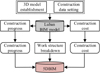 |
Fig. 2 Dynamic cost control model. |
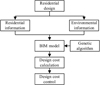 |
Fig. 3 BIM model cost control process. |
3.2 Visual collaborative design of residence based on BIM+VR
BIM technology effectively improves cost control and design efficiency in residential design through dynamic monitoring and visual management. However, it has limitations in presenting the effects of buildings and indoor environments [17,18]. Therefore, the research proposes to combine VR technology to construct a visual model. VR technology, with its advantages of real-time interaction, high-resolution graphics and immersive experience, can achieve dynamic visual display. However, its independent application faces challenges such as large amounts of building data, high modeling costs and long generation cycles. To this end, a VR residential visualization model based on BIM was researched and developed [19]. By integrating the structured building data of the BIM system and optimizing the data acquisition and processing procedures of the VR model, it can not only retain the technical characteristics of BIM in cost control and information integration, but also enhance the immersive preview ability of the completion effect, forming a two-way complementary technical integration path.
The residential visualization based on BIM+VR technology first needs to use BIM to build the three-dimensional model of residential buildings, summarize the problems in BIM application. Then it is necessary to use VR technology to build virtual scenes to solve them, achieving BIM+VR collaboration in residential design visualization. Figure 4 demonstrates that the visual collaboration of BIM+VR residential design.
As shown in Figure 4, in the BIM+VR collaboration, preliminary research is first conducted by the consultants, engineers, architects, developers, users, and other objects to obtain the basic requirements for residential design. And structural system suggestions and task function requirements are proposed. Secondly, based on the preliminary research results and the relevant theories of national policies and architectural design, reasonable suggestions on structural configuration are put forward, and the requirements of various indicators are gradually refined. Through further regulation, virtual scene construction of residential buildings is achieved. In the virtual scene building, BIM technology and relevant theories of architectural designers are used to build a three-dimensional model of residential buildings. And residential interiors are added to the model according to local culture and customs to establish a preliminary VR model [20]. Finally, the feasibility of building a comprehensive evaluation model based on the opinions of various parties is realized to realize the interactive collaborative design of BIM+VR visualization. This includes virtual scene roaming, residential area animation panorama video, and indoor dynamic simulation.
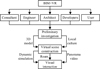 |
Fig. 4 Visual collaborative process of BIM+VR residential design. |
4 Experimental verification results of BIM+VR collaborative technology
4.1 BIM model experiment based on genetic algorithm
For the BIM model proposed by the research, the application of the genetic algorithm in the model was evaluated experimentally. The experimental environment was placed in Windows 7, and the genetic algorithm was written in Python. In order to make the output results basically stable, the initialization settings of the optimization parameters were adjusted repeatedly during the development and debugging of the algorithm. Finally, in the parameter initialization setting of the model, the target number was set to 3, the constraint condition was set to 18, and the independent variable was set to 10. In project parameter initialization, the number of activities is set to 2, and the early cost, intermediate cost, and end cost of activities are set. First, it evaluates the error of the genetic algorithm in the BIM model in solving the optimal solution in the calculation process, and compares the error against the early cost, middle cost, and end cost of the activity, as shown in Figure 5.
Figure 5 indicates that the mean absolute error and root mean square error between the genetic algorithm, simulated annealing algorithm, and particle swarm optimization algorithm are studied and compared. The results show that there are significant differences in the average absolute errors of the early cost, middle cost, and final cost of activities under the three algorithms, among which the average absolute error of the genetic algorithm is significantly smaller than the other two algorithms. Figure 5b shows the comparison results of the three algorithms in the calculation of root mean square error of early cost, intermediate cost, and final cost of activities. It demonstrates that the root means square error of the genetic algorithm is less than 5%, while the root means square error of the other two algorithms in the calculation of intermediate cost and the final cost is more than 5%. The above results show that the genetic algorithm can show lower error in cost control, which is of great significance to model cost control. Secondly, the optimal solution of the genetic algorithm in the calculation is evaluated, as shown in Figure 6.
Figure 6 illustrates that in the performance analysis of the genetic algorithm, Figure 6a depicts that the simulation of searching the optimal boundary of the genetic algorithm in the construction cost shows that there is a significant offline correlation between the early cost, middle cost and final cost of activities. Figure 6b shows the simulation results of the genetic algorithm for seeking the boundary of maintenance cost. It shows that in the calculation of maintenance cost, there is still a linear correlation between the early cost, medium-term cost, and final cost of activities. It can be seen from the calculation of the cost boundary that when the demand at the end of maintenance is US $523300, the early demand is US $971900, and the medium-term demand is US $654400. Combining Figure 6a and 6b, it can be seen that for both costs of residential construction and residential maintenance costs, the genetic algorithm has the best cost control, and both spend values are the smallest in early cost, mid-term cost and final cost; The simulated annealing algorithm and the particle swarm optimization algorithm do not show a significant linear relationship between the costs in different periods.The above results show that in the BIM model, the introduction of a genetic algorithm to realize the cost control of residential design is effective, and the design scheme can be determined by finding the optimal boundary of construction cost and maintenance cost. To understand the effect of the BIM model in the 3D model display of residential buildings, the study analyzes the effect of BIM model establishment by analyzing the relevant data of residential buildings in the BIM model. First, the safety of residential buildings is evaluated. For the safety of residential buildings, the data of five monitoring points in the BIM model are studied and analyzed. The risk value calculation results are indicated in Figure 7.
Figure 7a shows the risk value determination results of five monitoring points. It demonstrates that the risk values of different monitoring points show a normal distribution, and there are significant differences in the risk values of each monitoring point. In addition, it can be seen from the changes in the risk value of the monitoring points that the higher the residential altitude, the higher the risk value. Figure 7b is the total risk value calculation result of residential buildings based on the BIM model. Figure 7b demonstrates that the risk value of residential buildings also shows a normal distribution, and from the risk value evaluation, BIM can obtain the overall risk value of residential buildings, and its risk value is 0.67. The above results show that the BIM proposed by the research can obtain the design and construction risks of residential buildings from the three-dimensional model, and calculate the risk value, which has an important theoretical basis for the follow-up design of residential buildings. Finally, in the BIM model analysis, cost simulation is used to determine the cost control effect in the BIM model, as shown in Figure 8.
Figure 8 demonstrates that in the simulation test of the BIM 3D model, the daily capital usage under the three options of considering the construction cost optimization, considering the maintenance cost optimization, and considering the construction cost and maintenance cost optimization in the model are compared and analyzed. The results show that, after only considering the optimization of the construction cost, the daily capital use in the residential construction simulation is fluctuating with the continuous growth of the construction period, and the maximum capital use reaches US $251/day. When only the maintenance cost optimization is considered, the daily capital use of residential construction in the BIM model also shows a changing trend. The daily capital use calculated by simulation also shows a constant fluctuation while the construction period continues to increase, and the maximum daily capital use reaches US $400/day. When the optimization of construction cost and maintenance cost is considered at the same time, the daily capital use shown in the BIM model construction simulation changes slowly, and with the change of construction period, the maximum capital use is only US $215/day. The above results show that the BIM model proposed in the study can significantly reduce the amount of capital used in the residential construction and reduce the cost of residential design.
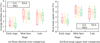 |
Fig. 5 Algorithm error comparison results. |
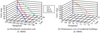 |
Fig. 6 Optimal boundary under genetic algorithm. |
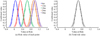 |
Fig. 7 BIM residential risk assessment. |
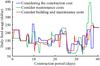 |
Fig. 8 BIM cost control effect. |
4.2 Effect analysis of BIM+VR technology visual collaborative design
In the research, a BIM model based on genetic algorithm cost control is proposed. To improve the visual effect of residential design, BIM+VR visual collaborative technology is proposed to analyze the visual collaborative design effect of BIM+VR technology. The computer processor used to undertake the VR equipment for the study was an Intel Core i5-7500; graphics card: Geforce GTX1060 6GB; memory size of at least 16GB; and an Intel 128G SSD high-speed solid state drive was used for data processing.First, it analyzes the visualization effect of residential buildings, as shown in Figure 9.
Figure 9 illustrates that the BIM+VR visualization collaboration proposed by the research can clearly show the construction simulation and the three-dimensional model of residential buildings in the construction completion stage. In the residential construction simulation, the construction progress and construction loss can be visualized offline, and the outdoor and indoor roaming can be realized through VR technology after the construction is completed. In the experimental content shown in Figure 9, the research mainly compares BIM technology and VR technology, aiming to explore the application effects and advantages of these two technologies in architectural design and construction. Through comparison, research has demonstrated that the powerful capabilities of BIM technology in information management and visualization, combined with the advantages of VR technology in immersive experience and interactivity, can provide more efficient and intuitive solutions for the construction industry, thereby enhancing the accuracy of design decisions and construction efficiency. This comparison can clarify their respective strengths and applicable scenarios, providing a theoretical basis for the selection of subsequent technological applications. Secondly, the real-time effect of BIM+VR visualization collaboration technology in the application is analyzed, and it is evaluated by analyzing its lag time, as shown in Figure 10.
In Figure 10, the lag time of BIM and VR technologies in BIM+VR applications is analyzed. It can be found that with the increasing test time, the lag time of BIM and VR technologies in applications continues to fluctuate between 0 and 0.06s. The lag time of BIM technology in the application shows a relatively stable fluctuation, while the lag time of VR technology shows a trend of increasing first and then stabilizing with the increasing test time. Therefore, the above results indicate that the BIM+VR model proposed in the study has good real-time performance in the visual design of residential buildings, and can bring users a more smooth roaming experience. Finally, in order to evaluate the application effect of BIM+VR technology in the visualization of residential design, an experimental study was designed, with 100 volunteers aged from 22 to over 60 as participants. The experiment adopted the questionnaire survey method, mainly collecting the subjective scores of participants in four aspects: experience, convenience, image resolution and interaction effect through online questionnaires. During the experiment, all participants had an immersive visual experience through VR devices and rated the performance of the BIM+VR system after the experience. The questionnaire adopts the Likert five-point scale, with scores ranging from 1 to 100. 1 indicates extremely poor and 100 indicates extremely good. The final experience evaluation of all testers was collected to indirectly evaluate the application value of BIM+VR residential visualization technology, as shown in Table 1.
It can be seen from Table 1 that all volunteers evaluated the application value of BIM+VR residential visualization technology from four aspects: experience, convenience, image resolution, and interaction effect. It reveals that in the evaluation of volunteers of different ages, the BIM+VR visualization collaboration technology proposed by the research has more than 90 points in the evaluation of experience and convenience. In the evaluation of image resolution and interaction effect, users over 60 years old scored below 80 points, and the rest scored above 90 points. The above results show that the BIM+VR residential design visualization proposed in the study has strong universality, and can obtain a higher evaluation in different age stages. To reflect the advanced nature of the research methods, the latest research results were adopted as the comparison objects in the study, including the information visualization algorithm based on Fruchterman-Reingold (FR) [21] and the mixed reality 3D visualization space generation technology [22]. The specific comparison results are shown in Table 2.
Table 2 presents the comparison results between BIM +VR technology and the 3D visualization space generation technology based on the Fruchterman-Reingold (FR) algorithm and mixed reality. It can be seen that BIM +VR demonstrates significant advantages in terms of visual clarity (score 91.22), real-time rendering speed (59.5 frames per second), user interaction experience (score 94.38), and cost control accuracy (95.45%). This indicates that BIM+VR technology can provide higher visualization quality and a smooth user experience, especially helping users better understand design intentions and spatial layouts in dynamic interactive environments. In addition, the high accuracy of cost control reflects the effectiveness of BIM+VR in construction project management, which helps to achieve more accurate budgeting and resource allocation. Relatively speaking, the performance of the FR algorithm and mixed reality technology is relatively inferior, especially showing certain limitations in real-time rendering speed and user interaction experience. These results fully demonstrate the advanced nature and superiority of BIM+VR technology in modern architectural design, providing important support for subsequent research and practical application.
It reveals that BIM+VR technology performs better in the subjective evaluation of both the application effect as well as the application value. From the analysis of the investment level, management level and strategic application level of the whole technology, the quantitative indicators at the investment level can visually analyze the benefits of different technologies. Compared with traditional BIM technology, BIM+VR technology has significantly reduced the amount of investment in reducing rework changes and engineering review. BIM+VR technology can create considerable quantitative value for the project.
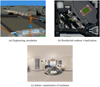 |
Fig. 9 Visualization effect of residential buildings. |
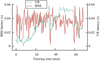 |
Fig. 10 Visualization model latency. |
Subjective evaluation of visualization effect (points).
Comparison results of the advancement of different algorithms.
5 Conclusion
The visualization of residential design has always been an important direction of the development of the current construction industry. To improve the visualization effect of residential design, a visual collaborative design scheme integrating BIM and VR technology is proposed. In the application of BIM technology, a genetic algorithm is introduced to realize the cost control of residential building design, and a BIM model is built. On this basis, VR technology is introduced to realize the roaming experience of users in residential buildings. Finally, the model and algorithm are tested and analyzed. The results show that compared with other cost control algorithms, the genetic algorithm introduced in the study has a lower calculation error, which is less than 5%. It can also quickly obtain the optimal construction cost in the search for the optimal boundary. In the analysis of the BIM model, it is shown that due to the addition of a genetic algorithm, the daily use of funds in the model construction simulation is reduced to less than 220 yuan. Finally, the visualization effect of BIM+VR is analyzed, and the results show that it can clearly show the situation before and after the construction of residential buildings, as well as the indoor and outdoor conditions of residential buildings. Its visual display evaluation demonstrates that the lag time is stable at around 0.04 s, and the maximum value is still lower than 0.06 s. It has strong real-time performance, and also maintains a high evaluation score in a user evaluation. The above results show that in residential design, BIM+VR technology has a more significant visualization effect, which can fully meet the needs of users. It is of great significance to the development of the architectural design. Although the research has achieved certain results in comparing the application effects of BIM technology and VR technology, there are still some limitations. For instance, the research might fail to cover all relevant variables, such as the impact of different project scales, team experiences, or specific industry requirements on the application of technology. Furthermore, the selection of experimental samples and time constraints may lead to insufficient universality of the results. Future research directions can focus on expanding the sample size and diversity to more comprehensively evaluate the combined effect of BIM and VR under different conditions, while exploring how to optimize the collaborative application of these two technologies to meet the more complex demands of construction projects. In addition, further research should also focus on the practical challenges of user experience and technology popularization, providing the industry with more practical and instructive solutions.
Funding
N/A
Conflicts of interest
There is no conflict of interest.
Author contribution statement
W.L., conceptualization, methodology, writing—original draft preparation, writing—review and editing, supervision; M.M., writing—review and editing, software, resources, data curation, formal analysis. All authors agree to this submission.
Declaration of interest statement
The authors claim no conflict of interest.
References
- B. Eilouti, Shape grammars as a reverse engineering method for the morphogenesis of architectural façade design, Front. Archit. Res. 8, 191–200 (2019) [Google Scholar]
- Z. Li, J. Dai, H. Chen, B. Lin, An ANN-based fast building energy consumption prediction method for complex architectural form at the early design stage, Build. Simulat. 12, 665–681 (2019) [Google Scholar]
- T. Wei, Y. Chen, Green building design based on BIM and value engineering, J. Ambient Intell. Hum. Comput. 11, 3699–3706 (2020) [Google Scholar]
- P. Namian, M. Parva, H. Keshmiri, Investigating the impact of lifestyle on contemporary residential design in Shiraz, Islam Life J. 5, 201–207 (2021) [Google Scholar]
- H. Kim, Y.K. Yi, QuVue implementation for decisions related to high-rise residential building layouts, Build. Environ. 148, 116–127 (2019) [Google Scholar]
- A. Alwisy, S. Bu Hamdan, B. Barkokebas, A. Bouferguene, M. Al-Hussein, A BIM-based automation of design and drafting for manufacturing of wood panels for modular residential buildings, Int. J. Constr. Manage. 19, 187–205 (2019) [Google Scholar]
- G.R. Roshan, R. Oji, S. Attia, Projecting the impact of climate change on design recommendations for residential buildings in Iran, Build. Environ. 155, 283–297 (2019) [Google Scholar]
- E.T. Ochedi, A. Taki, A framework approach to the design of energy efficient residential buildings in Nigeria, Energy Built Environ. 3, 384–397 (2022) [Google Scholar]
- Y.Y. Al-Ashmori, I. Othman, Y. Rahmawati, Y.H. Amran Mugahed, S.H. Abo Sabah, A.D. Rafindadi, M. Mikić, BIM benefits and its influence on the BIM implementation in Malaysia, Ain Shams Eng. J. 11, 1013–1019 (2020) [CrossRef] [Google Scholar]
- I. Kim, J. Choi, E.A.L. Teo, H. Sun, Development of K-BIM e-Submission prototypical system for the openBIM-based building permit framework, J. Civil Eng. Manage. 26, 744–756 (2020) [Google Scholar]
- A. Ahankoob, K. Manley, B. Abbasnejad, The role of contractors' building information modelling (BIM) experience in realising the potential values of BIM, Int. J. Constr. Manage. 22, 588–599 (2022) [Google Scholar]
- H. Wang, Landscape design of coastal area based on virtual reality technology and intelligent algorithm, J. Intell. Fuzzy Syst. 37, 5955–5963 (2019) [Google Scholar]
- Z. Zhuang, Optimization of building model based on 5G virtual reality technology in computer vision software, Math. Biosci. Eng. 18, 7936–7954 (2021) [Google Scholar]
- Y. Lu, L. Shi, BIM architecture design from the perspective of smart city and its application in traditional residential design, J. Intell. Fuzzy Syst. 40, 3127–3136 (2021) [CrossRef] [Google Scholar]
- Y. Xiao, J. Bhola, Design and optimization of prefabricated building system based on BIM technology, Int. J. Syst. Assur. Eng. Manage. 13, 111–120 (2022) [Google Scholar]
- J. Davidson, J. Fowler, C. Pantazis, M. Sannino, J. Walker, M. Sheikhkhoshkar, F. Pour Rahimian, Integration of VR with BIM to facilitate real-time creation of bill of quantities during the design phase: a proof of concept study, Front. Eng. Manage. 7, 396–403 (2020) [Google Scholar]
- I. Caetano, A. Leitão, Integration of an algorithmic BIM approach in a traditional architecture studio, J. Comput. Des. Eng. 6, 327–336 (2019) [Google Scholar]
- C. Ding, R. Kohli, Analysis of a building collaborative platform for Industry 4.0 based on building information modelling technology, IET Collaborat. Intell. Manuf. 3, 233–242 (2021) [Google Scholar]
- Ł. Wesołowski, Virtual reality and BIM as a potential tool for architectural engineers' education, World Trans. Eng. Technol. Educ. 17, 477–482 (2019) [Google Scholar]
- J. Jang, Y. Ko, W.S. Shin et al., Augmented reality and virtual reality for learning: an examination using an extended technology acceptance model, IEEE Access. 9, 6798–6809 (2021) [Google Scholar]
- M. Zhu, Design of network information visualization security cognition system based on QSOFM network and FR algorithm, J. Cyber. Secur. Technol. 8, 146–162 (2024) [Google Scholar]
- T. Li, S. Wu, Y. Jin et al., X-Space: Interaction design of extending mixed reality space from Web2D visualization, Vis. Inf. 7, 73–83 (2023) [Google Scholar]
Cite this article as: W. Li and M. Miao: Visualization scheme of residential design combining BIM and VR technology. Sust. Build. 8, 3 (2025). https://doi.org/10.1051/sbuild/2025009
All Tables
All Figures
|
Fig. 1 BIM technology application. |
| In the text | |
|
Fig. 2 Dynamic cost control model. |
| In the text | |
|
Fig. 3 BIM model cost control process. |
| In the text | |
|
Fig. 4 Visual collaborative process of BIM+VR residential design. |
| In the text | |
|
Fig. 5 Algorithm error comparison results. |
| In the text | |
|
Fig. 6 Optimal boundary under genetic algorithm. |
| In the text | |
|
Fig. 7 BIM residential risk assessment. |
| In the text | |
|
Fig. 8 BIM cost control effect. |
| In the text | |
|
Fig. 9 Visualization effect of residential buildings. |
| In the text | |
|
Fig. 10 Visualization model latency. |
| In the text | |
Current usage metrics show cumulative count of Article Views (full-text article views including HTML views, PDF and ePub downloads, according to the available data) and Abstracts Views on Vision4Press platform.
Data correspond to usage on the plateform after 2015. The current usage metrics is available 48-96 hours after online publication and is updated daily on week days.
Initial download of the metrics may take a while.