


| Issue |
Sust. Build.
Volume 9, 2026
|
|
|---|---|---|
| Article Number | 1 | |
| Number of page(s) | 21 | |
| Section | Sustainable Building Materials and Construction | |
| DOI | https://doi.org/10.1051/sbuild/2025012 | |
| Published online | 25 February 2026 | |
Original Article
Mechanical and stress-strain behavior of hybrid fiber-reinforced metakaolin-based recycled aggregate concrete
1
College of civil engineering, Xijing University, Xian, 710123, PR China
2
Department of Structural Engineering, College of Civil Engineering, Tongji University, Shanghai, 200092, PR China
* e-mail: This email address is being protected from spambots. You need JavaScript enabled to view it.
Received:
9
July
2024
Accepted:
26
November
2025
Abstract
This study investigates the effects of fiber on the mechanical performance and stress-strain characteristics of metakaolin-based recycled aggregate concrete (RAC). Ten experimental groups were designed, comprising single-fiber systems (steel fiber (SF), polyvinyl alcohol fiber (PF), and basalt fiber (BF)) and hybrid fiber systems combining SF-PF or SF-BF at blending ratios of 8:2, 7:3, and 5:5. Mechanical property evaluations included compressive strength, splitting tensile strength, elastic modulus, and full-range stress-strain curve analysis under uniaxial compression. Some constants are proposed based on test results to predict the compressive strength, splitting tensile strength, and elastic modulus of RAC. Furthermore, nonlinear regression analysis was performed to characterize the ascending and descending branches of stress-strain curves by the existing constitutive equations. The results indicate that the inclusion of fibers can effectively improve the mechanical properties of RAC. Based on some existing equations for compressive stress-strain curves of concrete, the parameters for the calculation of fiber-reinforced metakaolin-based RAC stress-strain curves were determined. Progressive substitution of SF with PF or BF in hybrid systems inversely correlates with strength and elastic modulus, while positively influencing peak strain development. A bilinear constitutive model derived from Al-Hassani's equation demonstrates superior fitting accuracy for hybrid fiber-reinforced metakaolin-based RAC. These results provide critical insights into the design of sustainable fiber-reinforced concrete with tunable mechanical properties through metakaolin activation and recycled aggregate utilization.
Key words: Mechanical behavior / hybrid fiber reinforcement / metakaolin / recycled aggregate concrete
© M.-M. Liu and K.-N. Liu, Published by EDP Sciences, 2026
 This is an Open Access article distributed under the terms of the Creative Commons Attribution License (https://creativecommons.org/licenses/by/4.0), which permits unrestricted use, distribution, and reproduction in any medium, provided the original work is properly cited.
1 Introduction
With the rapid development of industries around the world, the consumption of building materials is constantly increasing, especially concrete materials, with an average annual global demand of 40 billion tons [1]. Due to huge consumption, the natural resources (including natural sand and gravel, etc.) for concrete production are exploited in large quantities [2]. To alleviate the environmental problems caused by the overexploitation of natural resources, one of the widely used methods is to prepare recycled aggregate concrete (RAC) from construction waste as recycled coarse aggregate (RCA) [3–5]. However, compared with the natural coarse aggregate (NCA), RCA is easy to produce micro-cracks in the crushing process, and the surface of the processed RCA is rough, porous, and adhered to the old mortar. Thus, the strength and durability of RAC are inferior to that of ordinary concrete (NC) [6–9], which causes many restrictions in the application of RAC in building structures (including bridges, tunnels, highways, houses, etc.).
Metakaolin (MK), an active mineral material, is one of the best substitutes for cement [10,11]. MK can conduct a secondary hydration reaction with Ca(OH)2 generated by cement hydration to generate extra calcium silicate hydrate (C-S-H) gel, which can effectively reduce the internal micro-cracks and porosity of RAC, and dramatically improve the strength and durability of RAC [12–15]. P. O. Awoyera et al. [16] added MK into RAC at a proportion of 20% and found that the morphology and strength characteristics of RAC were improved. R. Siddique et al. [17] reported that the performance of NAC can be markedly modified when the MK content is 5–20% of the cement mass. Radonjanin et al. [18] pointed out that RAC containing 10% MK has the best overall performance and reduces the negative effect of RCA on concrete performance. Moreover, Rakesh et al. [19] and Kou et al. [20] reported that the RAC achieved the best performance after mixing 15% metakaolin.
Fiber, including steel fiber (SF), polyvinyl alcohol (PVA) fiber (PF), and basalt fiber (BF), as concrete performance reinforcement materials, can effectively improve the ductility and strength of RAC [21–23]. W. He et al. [24] found that mixed SF and polypropylene fiber (PPF) improved the microstructure and mechanical properties of RAC. Wang et al. [25] investigated the mechanical properties of hybrid fiber-reinforced concrete mixed with SF and PP fiber and obtained a mix ratio for higher performance. L. Dong et al. [26] found that the porosity and slump of RAC decreased with the increase in fiber content, but the strength, damping ratio, charge, and dynamic characteristics increased. Y. Wang et al. [27] found that the addition of BF and nano-silica was beneficial to expand the engineering application of RAC. Du La Man et al. [28] studied the effect of PVA fiber content on concrete strength, effective porosity, and permeability coefficient when the replacement rate of recycled coarse aggregate is 30%. H.Dilbas et al. [29] found that the combination of the optimized ball milling method (OBMM) and BF harmed the physical properties of RAC, but had a beneficial effect on the mechanical properties. H.K.S.El-Din et al. [30] studied the addition of SF, PF, or hybrid fiber and MK to concrete, and found that the strength obtained at all test ages was effective.
In addition, concrete, its stress-strain relationship is an essential part of the research and design of structures. A.S.M.Mendis et al. [31] reported that the available standard guidelines of ordinary concrete clouds be used to predict RAC. D. Gao et al. [32] and J.A. Carneiro et al. [33] established SF reinforced RAC model. S. Suryawanshi et al. [34] and G.F. Belén et al. [35] investigated the mechanical behavior of RAC under uniaxial compression and analyzed the influence of RCA on RAC. A. Chen et al. [36] proposed an improved constitutive model by considering the effects of RCA, rubber particles, and BF on the performance of concrete. Y. Zhou et al. [37] established a uniaxial constitutive model of concrete mixed with SF and PF through orthogonal experiments (including the generalized compression model and simplified compression model) and found that the simplified model may lead to large errors.
There are few previous studies on the coupling effect of MK and hybrid fiber on the performance improvement of RAC, especially in the stress-strain relationship. Therefore, a comprehensive study of RAC was studied in this paper, including its compressive strength, axial compressive strength, splitting tensile strength, bending toughness, elastic modulus, strain, and stress-strain relationship, etc., which provides a basis for the application of RAC in a wider range.
2 Experimental programs
2.1 Materials
2.1.1 Cementitious material
The cementitious materials used in this test consist of two parts, including PO 42.5R Qinling brand Type II Ordinary Portland Cement (OPC) and MK. The mineral chemical composition of the above materials is shown in Table 1.
Chemical compositions of OPC and MK (%).
2.1.2 Aggregate
The coarse aggregate used in the test includes NCA and RCA, among which RCA is the waste concrete aggregate (WCA) that has been used for 30 yr provided by Shaanxi Environmental Protection Company. In the preparation of RCA, the impurities such as glass and rubble in the WCA are firstly removed manually, and then the WCA is broken by a small jaw crusher. Finally, the crushed aggregate is screened with a square hole screen, washed, dried, and reserved. The fine aggregate is river sand (S) purchased locally in Xi'an. The basic physical properties of the test aggregate are shown in Table 2, and the grading curves are shown in Figure 1.
Basic physical properties of aggregate.
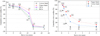 |
Fig. 1 Particle size distribution of aggregates: (a) coarse aggregate; (b) fine aggregate. |
2.1.3 Fiber
The fibers used in the test are steel fiber (SF), polyvinyl alcohol (PVA) fiber (PF), and basalt fiber (BF), as shown in Figure 2, and their main physical and mechanical parameters of the three fibers are shown in Table 3.
Physical and mechanical properties of fibers.
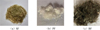 |
Fig. 2 Three kinds of fibers. |
2.2 Mixing
In most studies, MK has the best effect on the performance of RAC with a content of 15% [19,30]. Therefore, according to previous studies, the replacement amount of RCA is determined to be 30% [4,5,38,39], and the content of MK is selected to be 15%. Three kinds of fibers including SF, PF, and BF are added alone separately. In addition, under the condition that the total fiber volume is 1.5%, SF and PF, SF, and BF are mixed in metakaolin-based RAC at the percentages of 8:2, 7:3, and 5:5 respectively. The mixing proportions are shown in Table 4.
Mix proportions used in this study (kg/m3).
2.3 Specimen preparation
The 12 specimens were prepared for each group according to the mix ratio of 10 groups in Table 4. Among these, six 100 mm × 100 mm × 100 mm specimens are used to test the cube compressive strength and splitting tensile strength, respectively; three 100 mm × 100 mm × 300 mm are used to measure axial compressive strength and elastic modulus, respectively; three 100 mm × 100 mm × 400 mm specimens are used to test the flexural toughness. The averages of three specimens for each test were calculated as the results.
2.4 Test plan
The mechanical characteristics of RCA were performed in an MTS electro-hydraulic servo universal testing machine according to the Chinese code GB/T 50081-2018 [40] and CESC 13-2009 [41]. The loading device is shown in Figure 3. To obtain an accurate total stress-strain curve effectively, a mixture of force and displacement control is used. The loading rate of 0.5 MPa/s was maintained before the peak stress, and the deformation data were acquired by the strain gauge. Then the loading speed was changed to 0.1 mm/min and the deformation data was collected through the displacement meter. Finally, the cube's compressive strength, splitting tensile strength, and flexural strength were measured by replacing the chuck.
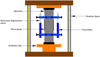 |
Fig. 3 MTS electro-hydraulic servo universal testing machine. |
3 Results and analysis
3.1 Workability of RAC
The workability of hybrid fiber-reinforced metakaolin-based RAC was evaluated by slump test, and the test results are shown in Figure 4. The workability of all RAC groups decreases after addition. For example, compared with metakaolin RAC (RM), the slump value of fiber-reinforced metakaolin-based RAC (RM-SF, RM-PF, and RM-BF) with single-doped fiber decreased by 2.38%, 24.64%, and 7.5%, respectively. When SF is mixed with PF or BF, the slump value of reinforced RAC declines with the increase of PF or BF. The slump value of RM-SF8-PF2, RM-SF7-PF3 and RM-SF5-PF5 are reduced by 4.88%, 8.86%, 20.93%, and the slump value of RM-SF8-BF2, RM-BF7-PF3, and RM-SF5-BF5 are reduced by 3.61%, 3.61%, 6.97%. This is mainly due to the adhesion, tension, and water absorption of the fiber [27]. In addition, discrete fibers in concrete can form a spatial network structure, which inhibits the flow of concrete [43]. Therefore, the workability of RAC is relatively good with a slump value of 69–86 mm.
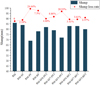 |
Fig. 4 Comparative analysis of slump. |
3.2 Compressive strength
Figure 5 presents the compressive strength test results of each mixture. The compressive strength of RAC rises after adding fibers [33,44–50]. Compared with RM without fiber addition, the compressive strength of RM-SF, RM-PF, and RM-BF increased by 19.9%, 14.6%, and 8.3%, respectively, after SF, PF, and BF were separately added to RAC. This is mainly because the C-S-H gel generated by cement hydration inside the concrete wraps the randomly distributed fibers together to form spatial grid structures, which restricts the transverse deformation of the RAC. As a result, the whole specimen is approximately in a three-dimensional compression state, effectively consuming the energy in the loading [51–53]. In addition, The above results indicate that steel fiber has a marked beneficial effect on the compressive strength of RCA, which is also consistent with the literature [33, 54]. This is because steel fibers have a higher intrinsic tensile strength and good adhesion to the matrix, and the spatial grid system formed in the RAC is stronger than PF and BF [55].
After mixed addition of SF and PF, SF and BF on RAC, the strength of RAC decreases with the increase of PF or BF. For example, the compressive strength of RM-SF8-PF2, RM-SF7-PF3, and RM-SF5-PF5 increase by 16.6%, 15.6%, and 9.9%. The compressive strength of RM-SF8-BF2, RM-SF7-BF3, and RM-SF5-BF5 increase by 13.5%, 11.9%, and 5.7%. The mixing addition results show that the compressive strength of RAC decreases sharply when PF and BF are mixed at more than 30%. By comparing the compressive strength of RM-SF, RM-SF8-PF2, and RM-SF8-BF2F, the compressive strength of RAC separately incorporated with SF is enhanced better than that of mixing SF and BF, SF, and PF. Furthermore, with equal SF percentages, the compressive strength of RAC doped with PF is higher than that of RAC doped with BF, which is possible because the strength and hydrophilicity of PF are superior to those of BF and are not easy to agglomerate.
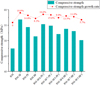 |
Fig. 5 Compressive strength of test specimens. |
3.3 Splitting tensile strength
Figure 6 shows the splitting tensile strength of different mixing specimens. The improvement effect of RAC splitting tensile strength reinforced with fiber is significant due to the fiber bridging effect, which is also reflected in previous studies [54,56–59]. Compared with MK, the splitting tensile strength of RAC increases by 41.1%, 33.5%, and 23.3% after adding SF, PF, and BF, respectively.
Similarly, when SF is mixed with PF or BF, the splitting tensile strength of RAC also decreases with the increase of PF or BF dosage. Specifically, the splitting tensile strength of RM-SF8-PF2, RM-SF7-PF3, and RM-SF5-PF5 increase by 36.5%, 34.1%, and 28.4%, and the splitting tensile strength of RM-SF8-BF2, RM-SF7-BF3 and RM-SF5-BF5 increase by 30.8%, 28.4%, and 25%, compared with MK. By comparing the splitting tensile strength of RM-SF, RM-SF8-PF2, and RM-SF8-BF2F, it found that the enhancement effect of RM-SF8-PF2 and RM-SF8-BF2 is inferior to that of RM-SF, consistent with the past research results [50,60, 61]. In addition, PF has a more pronounced effect on the splitting tensile strength of RAC than BF when PF and BF are mixed with SF in the same ratio. This is primarily due to the higher tensile strength and stronger dispersing ability of PF than that of BF, so the cracking effect of fiber bridging caused by the irregular distribution of PF in the matrix is higher than that of BF [62,63].
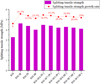 |
Fig. 6 Splitting tensile strength of RAC. |
3.4 Relationship between compressive strength and splitting tensile strength
According to previous research, there is usually a certain mathematical relationship between the compressive strength and splitting tensile strength of concrete, as shown in equation (1). Therefore, the nonlinear least square method and equation (1) are used in this paper to fit the compression and splitting tensile strength relationships of RAC, and the results are shown in Figure 7 and equation (2).
 (1)
(1)
Where a and b are constants. The fcu and fsts are compressive and splitting tensile strength of RAC, respectively.
 (2)
(2)
Like equation (2), many various formulas have been proposed with different parameters for the relationship between the two kinds of strength, for example, ACI (318-11): a = 0.53, b = 0.5; ACI (363R): a = 0.59, b = 0.5; EC (4-04): a = 0.3, b = 0.67. Therefore, the calculated results were compared with the test results, as illustrated in Figure 8.
From Figure 8, compared with the test results, the splitting tensile strength calculated by the ACI (318-11) is too small for the fiber-reinforced metakaolin RAC, while the calculation results of ACI (363R), EC (4-04), and equation (2) obtained through fitting in this paper are relatively consistent with the actual test values.
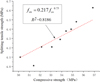 |
Fig. 7 Relationship between compressive strength and splitting tensile strength. |
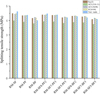 |
Fig. 8 Comparison of test and calculated splitting tensile strength of RAC. |
3.5 Flexural toughness
3.5.1 Flexural load-deflection curve
According to the flexural test of RAC, the flexural load-deflection curve is shown in Figure 9. When reaching the peak point, RM without fiber suddenly fails, and there is no descending section in the curve, indicating obvious brittle failure. However, the peak load of RAC added with fiber is significantly increased compared with that of RM. For example, the peak loads of RM-SF, RM-PF, RM-BF, RM-SF7-PF3, and RM-SF5-PF5 increase by 23.9%, 11.7%, 1.7%, 21.2%, 19.8%, and 16.1% compared with that of MK. In addition, the flexural load-deflection curve has a descending section after fiber addition, and RAC still has load-holding capacity after final destruction, showing good flexural toughness. By comparing RAC curves, it can be found that RM-SF has the largest peak load and residual load, and the largest area surrounded by load-deflection curves. Furthermore, by comparing the curves of RM-SF8-PF2, RM-SF7-PF3, and RM-SF5-PF5, the peak load, residual load, and the area enclosed by the load-deflection curve all tend to decline with the decrease of the SF content, which is also reflected in RAC added with the mixture of SF and BF.
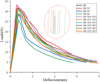 |
Fig. 9 Flexural load-deflection curve of RAC. |
3.5.2 Equivalent flexural strength
At present, three evaluation methods, namely, the ASTMC1018 method in the United States, the JCE-SF4 method in Japan, and the CECS13-2009 method in China, are commonly used to evaluate the flexural toughness of fiber-reinforced concrete. However, among these evaluation methods, the ASTMC1018 method in the United States is challenging to find the initial crack point when calculating the toughness index, so it does not apply to concrete with good deformation properties. In the Chinese CECS13-2009 method, which is similar to the Japanese JSCE-SF4 method, the equivalent flexural strength is used as the evaluation index, which is clearly defined, easy to calculate, and is not affected by the location of the initial crack point. Besides, the equivalent flexural strength is not affected by the unstable section of the load-deflection curve, whose area is smaller than that of the mid-span when the calculated deflection is l/150.
Based on the above reasons, the Japanese JSCE-SF4 method is adopted in this paper, and the equivalent flexural strength can be calculated as follows:
 (3)
(3)
Where fe = equivalent flexural strength; l = specimen span (mm); b and h are the width and height of the specimen (mm); Ωk denotes the area enclosed by the curve and the X-axis before the deflection is δk (N.mm2); δk is the calculated deflection l/k in the middle of the span, k= 150.
According to the test results and equation (6), the equivalent flexural strength of RAC is calculated, and the calculated results are shown in Table 5.
As can be seen from Table 5, the equivalent flexural strength of RM-SF is 7.52 MPa, which is the highest. When SF is mixed with PF or BF, respectively, equivalent flexural strength declines with the increasing proportion of PF or BF. For example, compared with MK-SF, the equivalent flexural strength of RM-SF8-PF2, RM-SF7-PF3, and RM-SF5-PF5 decreases by 5.45%, 7.71%, and 15.15%. In addition, by comparing the equivalent flexural strength of RM-SF5-PF5 and RM-SF5-BF5, it is found that the equivalent flexural strength of RM-SF5-PF5 is 3.6% higher than that of RM-SF5-BF5 when the mixing proportion of PF and BF is the same.
Equivalent flexural strength.
3.6 Toughening mechanism of fiber
Figure 10 illustrates the sketch drawing of the toughening mechanism of fiber on RAC. When the concrete is subjected to flexural load, SF with high elastic modulus, PF, and BF with low elastic modulus are randomly distributed in the matrix to inhibit the crack development of different scales, thus greatly improving the ductility of RAC. When the load on the matrix is small, PF with low elastic modulus in the matrix restricts the development of the primary crack, as shown in Figure 10a. As the load increases, the primary cracks in the matrix develop into micro-cracks, and the bridging effect of PF restrains the crack development, as shown in Figure 10b. When the load further grows and the micro-cracks expand, PF that bridges the cracks is pulled off and becomes deactivated. Then, the nearby SF bears the load and transfers it to the uncracked matrix. This stage is shown in Figure 10c. As the load continues to increase, micro-cracks expand into macro-cracks and SF continues to exert the bridging effect. Finally, with the rapid expansion of macro-cracks, all SFs are pulled out and the concrete is destroyed. This stage is shown in Figure 10d.
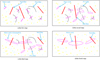 |
Fig. 10 Crack propagation model of fiber-reinforced RAC. |
3.7 Analysis of stress-strain characteristics under axial compression
3.7.1 Failure pattern
Figure 11 shows the failure pattern of specimens. In the process of axial compression, MK without fiber cracks forms an inclined failure interface along the diagonal. As the load increases, the concrete falls off at the failure interface, and then the main crack is formed. The whole process shows obvious brittle failure.
When the fiber is added into the RAC, the failure phenomena of the specimens are similar, and many fine cracks appear in the specimen. The generation and expansion of initial cracks are significantly put off, compared with those in RM. In addition, almost no concrete in the specimens falls off under uniaxial compression.
 |
Fig. 11 Failure pattern of RAC under axial compression. |
3.7.2 Stress-strain relationship
Figure 12 presents the complete stress-strain curves of specimens with different mix ratios. It can be noticed that the shapes of the ascending sections of the curves are approximately the same, while the shapes of the descending sections are different. The peak stress, peak strain, and residual strength of RAC added with fiber improve by varying extents compared with that of MK, and the falling segment of the curve is relatively smooth. For example, when the fiber is added into RAC separately, the enhancing effect of MK-SF is the most significant. However, when the mixture of SF and PF or BF is added, the peak stress of RAC declines, while the peak strain rises, compared with that of MK-SF.
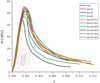 |
Fig. 12 Complete stress-strain curve. |
3.7.3 Axial compressive strength
In engineering design, the axial compressive strength is also another key indicator to evaluate the mechanical properties of RAC. The axial compressive strength of each mixing ratio is shown in Figure 13. From the figure, like cube compressive strength and splitting tensile strength, the axial compressive strength of RAC also improves after adding fibers. The axial compressive strength of MK-SF enhanced by 25.4% compared with MK, indicating an enhancement effect of MK-SF, and this result has also been found in previous studies [24,57]. In addition, the axial compressive strength of MK-SF-PF increases by 23.6%, 22.5%, and 17.9% when the SF and PF are mixed at the percentages of 8:2, 7:3, and 5:5, respectively, compared with that of MK. Similarly, when the SF and BF are mixed at the percentages of 8:2, 7:3, and 5:5, respectively, the axial compressive strength increases by 19.8%, 16.2%, and 10.9%. The axial compressive strength of RAC tends to decrease as the PF or BF content increases, which is the same trend as the cubic compressive strength and splitting tensile strength. The descending trend may be caused by the material, and fiber dispersion, which means when there is too much fiber in the mixture, the defects in the interfacial transition zone between cement and aggregate/fiber are easy to occur [64].
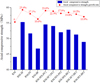 |
Fig. 13 Comparison of axial compressive strength. |
3.7.4 Elastic modulus
The elastic modulus of RAC is calculated according to the axial compression test, and the results are shown in Figure 14. It is found that the elastic modulus of RAC declines after fiber addition. For example, the elastic modulus of RM-BF and RM-SF5-BF5 decreases by 37.66% and 34.26% respectively, compared with that of MK. The descending trend of the elastic modulus is due to the full reaction of the active SiO2 in MK with Ca(OH)2, generating additional C-S-H gels that effectively fill the microcracks and pores at the interface between the old and new mortar in the matrix and improve the internal structure [19,38,65,66]. However, when the fibers are added, there are more bonding interfaces between the fiber and the matrix. These interfaces are prone to defects that reduce the elastic modulus of RAC.
In addition, similar to the splitting tensile strength, the relationship between the elastic modulus and the compressive strength is also fitted nonlinearly, as shown in Figure 15 and equation (4).
 (4)
(4)
Where Ec represents elastic modulus.
For the elastic modulus, various national codes have proposed different empirical formulas. According to ACI (318-11), the parameters are: a = 4370 and b = 0.5. ACI (363R) recommends: a = 3320, b = 0.5, and c = 6900 [2, 67]. In contrast, the European codes propose the following values: a = 22 and b = 0.3, as given in equation (10) [68].
From Figure 16, the elastic modulus of RAC with fiber calculated by European code is larger than the experimental results, while the calculation error of the other three equations is small. The elastic modulus of MK without fiber calculated by equation (4), ACI (318-11), and ACI (363R) has a large error, while calculated by European code is more accurate. In summary, equation (4) is recommended to predict the elastic modulus of RAC.
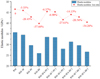 |
Fig. 14 Comparison of elastic modulus. |
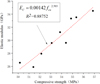 |
Fig. 15 Relationship between elastic modulus and compressive strength. |
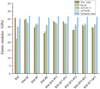 |
Fig. 16 Comparison between experimental and calculated results of elastic modulus. |
3.7.5 Peak strain
The strain corresponding to the axial compressive strength is selected as the peak strain for analysis, and the results are shown in Figure 17. The addition of fiber has a positive effect on the peak strain of concrete and enhances the deformation capacity of RAC [69, 70]. The improvement of the peak strain of RAC with PF is greater than that with SF or BF in the case of single fiber incorporation. When SF and PF are mixed, the peak strain of RAC increases by 21.94% to 27.14% compared to MK as the PF mixing ratio increases, with RM-SF5-PF5 having the most significant increase in peak strain. A similar trend is also found in the peak strain of RAC added with the mixture of SF and BF. When the fibers are mixed in different proportions, the larger the proportion of fibers with low elastic modulus, the more pronounced the effect on the increase in peak strain of RAC. In addition, when PF or BF of the same amount is mixed with SF, PF has a more significant effect on the increase in peak strain than BF.
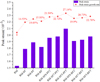 |
Fig. 17 Comparison of peak strain. |
3.7.6 Stress-strain constitutive models of concrete
In response to the characteristics of concrete materials during compression, domestic and foreign researchers have proposed many stress-strain curve equations for concrete. Scholars including Guo [71], Sargin [72], and Saenz [73] et.al divide concrete compression stress-strain curves into curve equations of the rising section and curve equations of the decreased segment. By comparing the three curve equations, it is found that the ascending section function has polynomial and rational equations, while the descending section curve equation is more homogeneous in form and roughly the same for all three. In addition, Al-Hassani [74] proposed the form of a non-piecewise curve equation, which is simple. Therefore, the above-mentioned curvilinear equations are analyzed by nonlinear regression in this paper, by keeping the form of the equation unchanged and changing the fitting parameters to achieve better accuracy. The equations of each curve are shown in Table 6.
Equation of compressive stress-strain curve in different forms.
3.7.7 Curve equations of ascending section and fitting parameters
The test results of RAC are non-linearly fitted by compressive stress-strain curve equations in Table 6, and the fitting curves and parameters of the ascending section are shown in Figure 18 and Table 7. The ascending section of the curve can be well-fitted by the curve equations, and the fitting accuracy is high. The curve equation in the exponential form proposed by Al-Hassani has the highest fitting accuracy. Secondly, the fitting accuracy of the polynomial curve equation proposed by Guo is higher than that of the rational curve equation proposed by Sargin and Saenz, respectively.
Curve fitting parameters of ascending section.
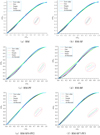 |
Fig. 18 Fitting curve of ascending section. |
3.7.8 Curve equations of descending section and fitting parameters
There are a few equations of the falling segments of concrete stress-strain curves, which are almost the same. In this paper, the test results are nonlinearly fitted by the rational equation proposed by Saenz and the exponential equation proposed by Al-Hassani. The fitting curves and parameters of the descending section are shown in Figure 19 and Table 8. It can be seen that the curve equations of Saenz and Al-Hassani can better reflect the descending section of the curve, especially the curve equations of Al-Hassani are in better agreement with the experimental results and have higher fitting accuracy.
To sum up, by comparing the fitting results of different formal equations, the curve equation proposed by Al-Hassani divides the fitting stress-strain curve into two sections, which is suggested to be used for better fitting results.
Curve fitting parameters of decreasing section.
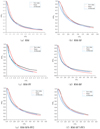 |
Fig. 19 Fitting curve of descending section. |
4 Conclusions
In this study, the mechanical characteristics and stress-strain relations of metakaolin-based RAC added with SF, PF, or BF, and the mixture of SF and PF, and SF and BF in different percentages are studied. The detailed conclusions are summarized as follows:
After adding fiber, the failure pattern of RAC exhibits ductile failure, and the mechanical properties are significantly enhanced, especially the mechanical properties of MK-SF. When two kinds of fibers (including SF and PF, SF and BF) are mixed in different proportions and added, the performance enhancement effect on the metakaolin-based RAC decreases as the proportion of PF or BF increases.
The elastic modulus of concrete added with fiber decreases by varying degrees. The elastic modulus of RM-BF declines the most significantly, reaching 37.66%. When SF is mixed with PF or BF in different proportions, the elastic modulus continues to decrease compared with RM-SF, and the elastic modulus of RM-SF5-PF5 and RM-SF5-BF5 decreases by 27.61% and 34.26%, respectively. However, the peak strain of RAC shows opposite characteristics after fiber addition. With the increasing proportion of PF or BF, the peak strain increases, especially that of RM-SF5-PF5, which reaches 27.14%.
According to the existing standards and the test data, the formulas for calculating the relationship between compressive strength splitting tensile strength, and elastic modulus are proposed. Through comparison, it was found that the calculated values obtained from the proposed formula have a small error compared to the test values and can accurately predict their relationship with compressive strength.
The compressive stress-strain curves of RAC in this paper are nonlinearly fitted by the existing concrete compression curve equations. The curve equation proposed by Al-Hassani is suggested to be used to divide the fitting stress-strain curve into two sections (ascending and descending sections), for better fitting results.
Funding
This work was supported by the National Natural Science Foundation of China (Nos. 51678480 and 5217042298), Project on Key Research and Development of Shaanxi Province (No. 2021SF-521 and 2022SF-375). Natural Science Foundation of Shaanxi Province (No. 2021JQ-844).
Conflicts of interest
The authors declare that they have no known competing financial interests or personal relationships that could have appeared to influence the work reported in this paper.
Data availability statement
All data included in this study are available upon request by contact with the corresponding author.
Author contribution statement
LIU Ming-Ming: Conceptualization, Methodology, Formal analysis, Writing - original draft. LIU Kang-Ning: Conceptualization, Investigation Funding acquisition.
References
- V.W.Y. Tam, M. Soomro, A.C. Jorge Evangelista, A review of recycled aggregate in concrete applications (2000–2017), Constr. Build. Mater. 172, 272–292 (2018) [Google Scholar]
- S. Gao, L. Guo, Utilization of coal gangue as coarse aggregates in structural concrete, Constr. Build. Mater. 268, 121212 (2021) [Google Scholar]
- P. Sormunen, T. Krki, Recycled construction and demolition waste as a possible source of materials for composite manufacturing, J. Build. Eng. 24, 100742 (2019) [Google Scholar]
- F. Xu, S. Wang, T. Li et al., Mechanical properties and pore structure of recycled aggregate concrete made with iron ore tailings and polypropylene fibers, 33, 101572 (2021) [Google Scholar]
- T. Li, S. Wang, F. Xu et al., Study of the basic mechanical properties and degradation mechanism of recycled concrete with tailings before and after carbonation, J. Clean. Prod. 259, 120923 (2020) [Google Scholar]
- S. Arora, B. Singh, B. Bhardwaj, Strength performance of recycled aggregate concretes containing mineral admixtures and their performance prediction through various modeling techniques, J. Build. Eng. 24, 100741 (2019) [Google Scholar]
- Rajhans, Puja, Panda, et al., Sustainable self compacting concrete from C&D waste by improving the microstructures of concrete ITZ, Constr. Build. Mater. 28, 557–570 (2018) [Google Scholar]
- B. Akcay, M.A. Tasdemir, Performance evaluation of silica fume and metakaolin with identical finenesses in self compacting and fiber reinforced concretes, Constr. Build. Mater. 185, 436–444 (2018) [Google Scholar]
- T.G. A, R.V.S. B, J.D.B. B et al., Mechanical and durability performance of mortars with fine recycled concrete aggregates and reactive magnesium oxide as partial cement replacement - ScienceDirect, Cem. Concr. Compos. 105, 103420 (2019) [Google Scholar]
- R. Robayo-Salazar, J. Mejia-Arcila, M.D.G. Ruby et al., Life cycle assessment (LCA) of an alkali-activated binary concrete based on natural volcanic pozzolan: a comparative analysis to OPC concrete, Constr. Build. Mater. 176, 103–111 (2018) [Google Scholar]
- G. Habert, J.B.d.E.d. Lacaillerie, N. Roussel, An environmental evaluation of geopolymer based concrete production: reviewing current research trends, J. Clean. Prod. 19, 1229–1238 (2011) [CrossRef] [Google Scholar]
- J.M. Justice, K.E. Kurtis, Influence of metakaolin surface area on properties of cement-based materials, J. Mater. Civil Eng. 19, 762–771 (2007) [Google Scholar]
- J.J. Brooks, M.A.M. Johari, M. Mazloom, Effect of admixtures on the setting times of high-strength concrete, Cem. Concr. Compos. 22, 293–301 (2000) [Google Scholar]
- V. Kannan, K. Ganesan, Chloride and chemical resistance of self compacting concrete containing rice husk ash and metakaolin, Constr. Build. Mater. 51, 225–234 (2014) [Google Scholar]
- K.H. Younis, A.A. Amin, H.G. Ahmed et al., Recycled aggregate concrete including various contents of metakaolin: mechanical behavior, Adv. Mater. Sci. Eng. 2020, 1–17 (2020) [CrossRef] [Google Scholar]
- P.O. Awoyera, U.C. Okoro, Filler-ability of highly active metakaolin for improving morphology and strength characteristics of recycled aggregate concrete, Silicon 11, 1971–1978 (2019) [Google Scholar]
- R. Siddique, J. Klaus, Influence of metakaolin on the properties of mortar and concrete: A review, Appl. Clay Sci. 43, 392–400 (2009) [Google Scholar]
- V. Radonjanin, M. MaleEv, S.A. Marinkovi et al., Green recycled aggregate concrete, Constr. Build. Mater. 47, 1503–1511 (2013) [Google Scholar]
- B.B. Mukharjee, R. Muduli, Performance assessment of concrete incorporating recycled coarse aggregates and metakaolin: a systematic approach, Constr. Build. Mater. 233, 117223 (2019) [Google Scholar]
- S.C. Kou, C.S. Poon, F. Agrela, Comparisons of natural and recycled aggregate concretes prepared with the addition of different mineral admixtures, Cem. Concr. Compos. 33, 788–795 (2011) [Google Scholar]
- Alnahhal, Wael, Aljidda et al., Flexural behavior of basalt fiber reinforced concrete beams with recycled concrete coarse aggregates, Constr. Build. Mater. 169, 165–178 (2018) [Google Scholar]
- A. Jalal, N. Shafiq, E. Nikbakht et al., Mechanical properties of hybrid basalt-polyvinyl alcohol (PVA) fiber reinforced concrete, Key Eng. Mater. 744, 3–7 (2017) [Google Scholar]
- T. Yaowarat, S. Horpibulsuk, A. Arulrajah et al., Compressive and flexural strength of polyvinyl alcohol-modified pavement concrete using recycled concrete aggregates, J. Mater. Civil Eng. 30, 0002233 (2018) [Google Scholar]
- W.C. He, X.Q. Kong, Y. Fu et al., Experimental investigation on the mechanical properties and microstructure of hybrid fiber reinforced recycled aggregate concrete, Constr. Build. Mater. 261, 120448 (2020) [Google Scholar]
- P. Wang, Z. Huang, J. Jiang et al., Performance of hybrid fiber reinforced concrete with steel fibers and polypropylene fibers, Civil Eng. Urban Plan. 26, 458–461 (2012) [Google Scholar]
- D. Lu, H. Cao, Q. Shen et al., Dynamic characteristics and chloride resistance of basalt and polypropylene fibers reinforced recycled aggregate concrete, Adv. Polym. Technol. 2020, 1–9 (2020) [Google Scholar]
- Y. Wang, P. Hughes, H. Niu et al., A new method to improve the properties of recycled aggregate concrete: composite addition of basalt fiber and nano-silica, J. Clean. Prod. 236, 117602 (2019) [Google Scholar]
- Man, D. La, Study on affection of the PVA fiber on recycled coarse aggregate to porous concrete performance, Appl. Mech. Mater. 438-439, 304–308 (2013) [Google Scholar]
- H. Dilbas, Z. Akr, Influence of basalt fiber on physical and mechanical properties of treated recycled aggregate concrete, Constr. Build. Mater. 254, 119216 [Google Scholar]
- H.K. Shehab El-Din, A.S. Eisa, B.H. Abdel Aziz et al., Mechanical performance of high strength concrete made from high volume of Metakaolin and hybrid fibers, Constr. Build. Mater. 140, 203–209 (2017) [CrossRef] [Google Scholar]
- A.S.M. Mendis, S. Al-Deen, M. Ashraf, Behaviour of similar strength crumbed rubber concrete (CRC) mixes with different mix proportions, Constr. Build. Mater. 137, 354–366 (2017) [Google Scholar]
- Gao, Danying, Nokken et al., Compressive behavior of steel fiber reinforced recycled coarse aggregate concrete designed with equivalent cubic compressive strength, Constr. Build. Mater. 141, 235–244 (2017) [Google Scholar]
- J.A. Carneiro, P.R.L. Lima, M.N.B. Leite et al., Compressive stress–strain behavior of steel fiber reinforced-recycled aggregate concrete, Cem. Concr. Compos. 46, 65–72 (2014) [Google Scholar]
- S. Suryawanshi, B. Singh, P. Bhargava, Equation for stress–strain relationship of recycled aggregate concrete in axial compression, Mag. Concr. Res. 70, 1–9 (2017) [Google Scholar]
- G.-F. Belén, M.-A. Fernando, C.L. Diego et al., Stress–strain relationship in axial compression for concrete using recycled saturated coarse aggregate, Constr. Build. Mater. 25, 2335–2342 (2011) [Google Scholar]
- A. Chen, X. Han, M. Chen et al., Mechanical and stress-strain behavior of basalt fiber reinforced rubberized recycled coarse aggregate concrete, Constr. Build. Mater. 260, 119888 (2020) [Google Scholar]
- Y. Zhou, Y. Xiao, A. Gu et al., Orthogonal experimental investigation of steel-PVA fiber-reinforced concrete and its uniaxial constitutive model, Constr. Build. Mater. 197, 615–625 (2019) [Google Scholar]
- H. Dilbas, M. Imek, An investigation on mechanical and physical properties of recycled aggregate concrete (RAC) with and without silica fume, Constr. Build. Mater. 61, 50–59 (2014) [Google Scholar]
- S.P. Yap, P.Z.C. Chen, Y. Goh et al., Characterization of pervious concrete with blended natural aggregate and recycled concrete aggregates, J. Clean. Prod. 181, 155–165 (2018) [Google Scholar]
- GB/T 50081-2002, Standard for test method of mechanical properties on ordinary concrete, Ministry of Construction of the People’s Republic of China, 2003 [Google Scholar]
- CESC-13-2009, Standard test methods for fiber reinforced concrete, China Industry Standard-Recommended Standards for Engineering Construction, 2009 [Google Scholar]
- GB/T 50080-2002, Standard for test method of performance on ordinary fresh concrete, Ministry of Construction of the People’s Republic of China, 2003 [Google Scholar]
- C. Jiang, K. Fan, F. Wu et al., Experimental study on the mechanical properties and microstructure of chopped basalt fibre reinforced concrete, Mater. Des. 58, 187–193 (2014) [Google Scholar]
- V. Afroughsabet, L. Biolzi, T. Ozbakkaloglu, Influence of double hooked-end steel fibers and slag on mechanical and durability properties of high performance recycled aggregate concrete, Compos. Struct. 181, 273–284 (2017) [Google Scholar]
- H. Katkhuda, N. Shatarat, Improving the mechanical properties of recycled concrete aggregate using chopped basalt fibers and acid treatment, Constr. Build. Mater. 140, 328–335 (2017) [Google Scholar]
- A.B. Kizilkanat, N. Kabay, V. Akyuncu et al., Mechanical properties and fracture behavior of basalt and glass fiber reinforced concrete: an experimental study, Constr. Build. Mater. 100, 218–224 (2015) [Google Scholar]
- C. High, H.M. Seliem, A. El-Safty et al., Use of basalt fibers for concrete structures, Constr. Build. Mater. 96, 37–46 (2015) [Google Scholar]
- H.K. Shehab El-Din, A.S. Eisa, B.H. Abdel Aziz et al., Mechanical performance of high strength concrete made from high volume of Metakaolin and hybrid fibers, Constr. Build. Mater. 140, 203–209 (2017) [CrossRef] [Google Scholar]
- J. Nam, G. Kim, J. Yoo et al., Effectiveness of fiber reinforcement on the mechanical properties and shrinkage cracking of recycled fine aggregate concrete, Materials 9, 131–142 (2016) [Google Scholar]
- M. Mastali, A. Dalvand, A.R. Sattarifard et al., Characterization and optimization of hardened properties of self-consolidating concrete incorporating recycled steel, industrial steel, polypropylene and hybrid fibers, Compos. Part B Eng. 151, 186–200 (2018) [Google Scholar]
- R. Chan, M.A. Santana, A.M. Oda et al., Analysis of potential use of fibre reinforced recycled aggregate concrete for sustainable pavements, J. Clean. Prod. 218, 183–191 (2019) [Google Scholar]
- L. Wang, S.H. Zhou, Y. Shi et al., Effect of silica fume and PVA fiber on the abrasion resistance and volume stability of concrete, Compos. Part B Eng. 130, 28–37 (2017) [Google Scholar]
- J. Xiao, W. Li, Z. Sun et al., Properties of interfacial transition zones in recycled aggregate concrete tested by nanoindentation, Cem. Concr. Compos. 99, 111650 (2013) [Google Scholar]
- L.A.Q. A, B.A. B, A.A. C, Combined effects of supplementary cementitious materials (silica fume, GGBS, fly ash and rice husk ash) and steel fiber on the hardened properties of recycled aggregate concrete, Constr. Build. Mater. 263, 120636 (2020) [Google Scholar]
- H.R. Pakravan, M. Latifi, M. Jamshidi, Hybrid short fiber reinforcement system in concrete: a review, Constr. Build. Mater. 142, 280–294 (2017) [Google Scholar]
- S.C. Lee, J.H. Oh, J.Y. Cho, Compressive behavior of fiber-reinforced concrete with end-hooked steel fibers, Materials 8, 1442–1458 (2015) [Google Scholar]
- H. Liu, J. Yang, X. Kong et al., Basic mechanical properties of basalt fiber reinforced recycled aggregate concrete, Open Civil Eng. J. 11, 43–53 (2017) [Google Scholar]
- S.E. Fang, H.S. Hong, P.H. Zhang, Mechanical property tests and strength formulas of basalt fiber reinforced recycled aggregate concrete, Materials 11, 1851–1856 (2018) [Google Scholar]
- M. Ahmadi, S. Farzin, A. Hassani et al., Mechanical properties of the concrete containing recycled fibers and aggregates, Constr. Build. Mater. 144, 392–398 (2017) [Google Scholar]
- V.M. Malhotra, G.G. Carette, A. Bilodeau, Mechanical properties and durability of polypropylene fiber reinforced high-volume fly ash concrete for shotcrete applications, Aci Mater. J. 91, 478–486 (1994) [Google Scholar]
- H. Zhong, M. Zhang, Experimental study on engineering properties of concrete reinforced with hybrid recycled tyre steel and polypropylene fibres, J. Clean. Prod. 259, 120914 (2020) [Google Scholar]
- D. Wang, Y. Ju, H. Shen et al., Mechanical properties of high performance concrete reinforced with basalt fiber and polypropylene fiber, Constr. Build. Mater. 197, 464–473 (2019) [Google Scholar]
- M. Tabatabaeian, A. Khaloo, A. Joshaghani et al., Experimental investigation on effects of hybrid fibers on rheological, mechanical, and durability properties of high-strength SCC, Constr. Build. Mater. 147, 497–509 (2017) [Google Scholar]
- J. Xie, L. Huang, Y. Guo et al., Experimental study on the compressive and flexural behaviour of recycled aggregate concrete modified with silica fume and fibres, Constr. Build. Mater. 178, 612–623 (2018) [Google Scholar]
- S. Wild, J.M. Khatib, A. Jones, Relative strength, pozzolanic activity and cement hydration in superplasticised metakaolin concrete, Cem. Concr. Res. 26, 1537–1544 (1996) [Google Scholar]
- C.Z. Zhang, A.Q. Wang, M.S. Tang et al., The filling role of pozzolanic material, Cem. Concr. Res. 26, 943–947 (1996) [Google Scholar]
- Mahmoud, Kassem, Ahmed et al., Sustainable approach for recycling treated oil sand waste in concrete: engineering properties and potential applications, J. Clean. Prod. 204, 50–59 (2018) [Google Scholar]
- E.C.F. Standardization, Design of concrete structures, Part 1 : General rules and rules for buildings, Eurocode 2 (1992) [Google Scholar]
- X.L. A, T.W. A, H.C. B et al., Compressive stress-strain behavior of CFRP-confined lightweight aggregate concrete reinforced with hybrid fibers, Compos. Struct. 244, 112288 (2020) [Google Scholar]
- Mahmoud, Hassanpour et al., Lightweight aggregate concrete fiber reinforcement – a review - ScienceDirect, Constr. Build. Mater. 37, 452–461 (2012) [Google Scholar]
- G. Zhenhai, Experimental investigation of the complete stress-strain curve of concrete, J. Build. Struct. 1–9 (1982) [Google Scholar]
- C. Piero, P. Maurizio, S. Nino, Stress-strain law for confined concrete with hardening or softening behavior, Adv. Civil Eng. 21, 39–49 (2013) [Google Scholar]
- M. SARCIN, Stress-strain relationship for concrete and analysis of structural concrete sections, Solid Mechanic Pivision University of Waterloo, Waterloo, 1971, pp. 21–22 [Google Scholar]
- H.M. Al-Hassani, W.I. Khalil, L.S. Danha, Proposed model for uniaxial compression behavior of reactive powder concrete, 2015 [Google Scholar]
Cite this article as: M.-M. Liu and K.-N. Liu: Mechanical and stress-strain behavior of hybrid fiber-reinforced metakaolin-based recycled aggregate concrete. 9, 1 (2026), https://doi.org/10.1051/sbuild/2025012
All Tables
All Figures
|
Fig. 1 Particle size distribution of aggregates: (a) coarse aggregate; (b) fine aggregate. |
| In the text | |
|
Fig. 2 Three kinds of fibers. |
| In the text | |
|
Fig. 3 MTS electro-hydraulic servo universal testing machine. |
| In the text | |
|
Fig. 4 Comparative analysis of slump. |
| In the text | |
|
Fig. 5 Compressive strength of test specimens. |
| In the text | |
|
Fig. 6 Splitting tensile strength of RAC. |
| In the text | |
|
Fig. 7 Relationship between compressive strength and splitting tensile strength. |
| In the text | |
|
Fig. 8 Comparison of test and calculated splitting tensile strength of RAC. |
| In the text | |
|
Fig. 9 Flexural load-deflection curve of RAC. |
| In the text | |
|
Fig. 10 Crack propagation model of fiber-reinforced RAC. |
| In the text | |
|
Fig. 11 Failure pattern of RAC under axial compression. |
| In the text | |
|
Fig. 12 Complete stress-strain curve. |
| In the text | |
|
Fig. 13 Comparison of axial compressive strength. |
| In the text | |
|
Fig. 14 Comparison of elastic modulus. |
| In the text | |
|
Fig. 15 Relationship between elastic modulus and compressive strength. |
| In the text | |
|
Fig. 16 Comparison between experimental and calculated results of elastic modulus. |
| In the text | |
|
Fig. 17 Comparison of peak strain. |
| In the text | |
|
Fig. 18 Fitting curve of ascending section. |
| In the text | |
|
Fig. 19 Fitting curve of descending section. |
| In the text | |
Current usage metrics show cumulative count of Article Views (full-text article views including HTML views, PDF and ePub downloads, according to the available data) and Abstracts Views on Vision4Press platform.
Data correspond to usage on the plateform after 2015. The current usage metrics is available 48-96 hours after online publication and is updated daily on week days.
Initial download of the metrics may take a while.